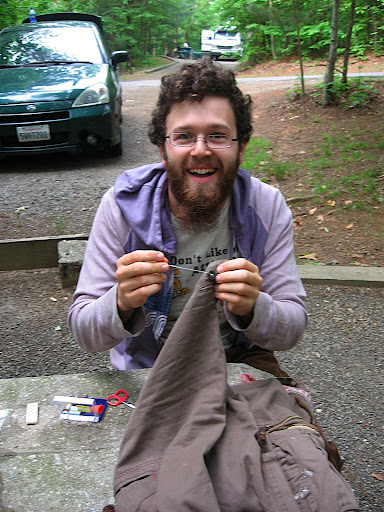
Our day having been shortened both technically and physically by our entrance into the final time zone, we each spontaneously awoke at 7am. (Alternatively, this may have been due to a gaggle of bees going ahead and mistaking our tent for some type of flowie.) The early rise gave us a chance to relax, sew buttons back on our clothes,
and also provided ample time to navigate the winding roads leading to Earthaven Ecovillage.
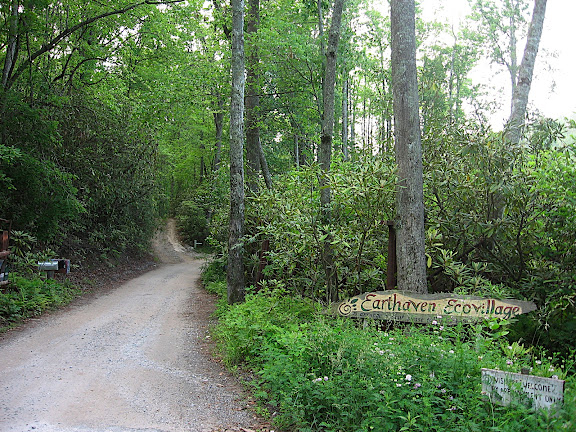
Sticks & Stones
A woman named Suchi showed us around Earthaven, introducing us to trees, water, buildings, and food. A hummingbird invited us into their conference hall.
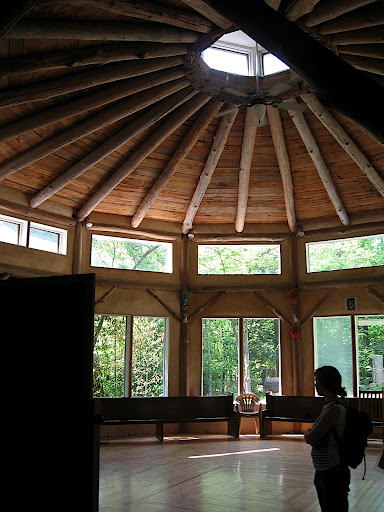
Twice a month, all 40 members meet in this 13-sided round-pole timber-frame building for 4 hours to make decisions using consensus (rather than pseudoconsensus). Smaller committees meet more regularly.
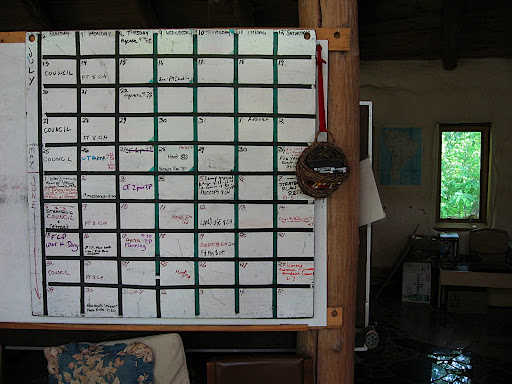
This building also doubles as the school,
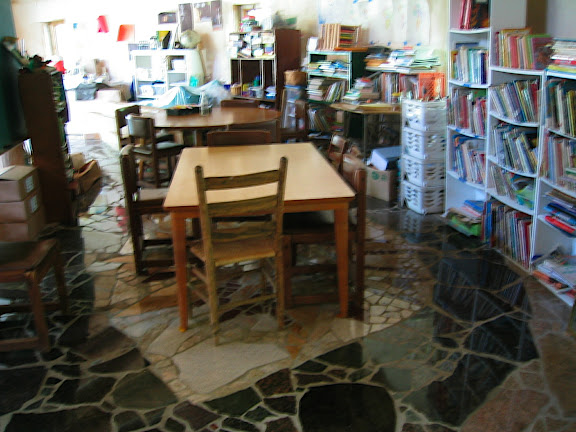
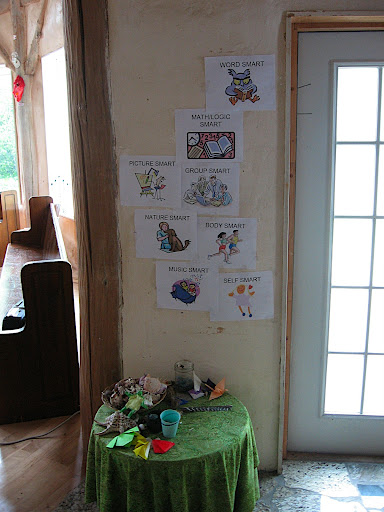
which children attend three days a week, to augment their parents' homeschooling. Clip-art demonstrates that the children are smart in 8 ways.
Many of the other buildings on the property were equally immaculate. This multi-story passive-solar timber-frame building houses many members, though we can't remember how many.
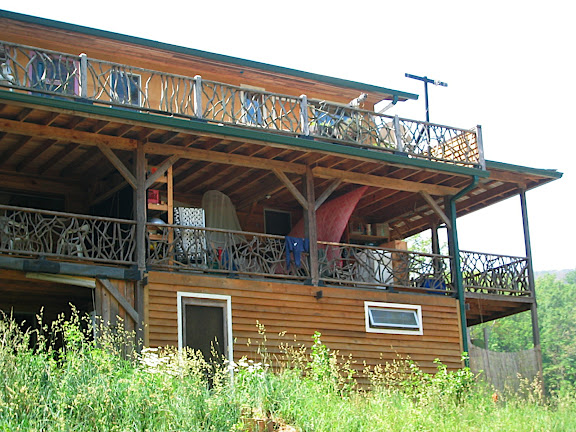
An abundance of windows on the South side and a dearth on the North side (pictured) keeps the building warm through all but the coldest days of winter, and keeps it chilly on the hottest days of summer.
Other types of buildings included stick-frame,
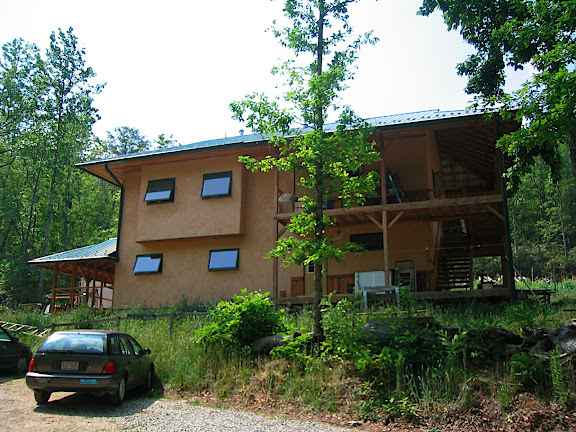
adobe brick,
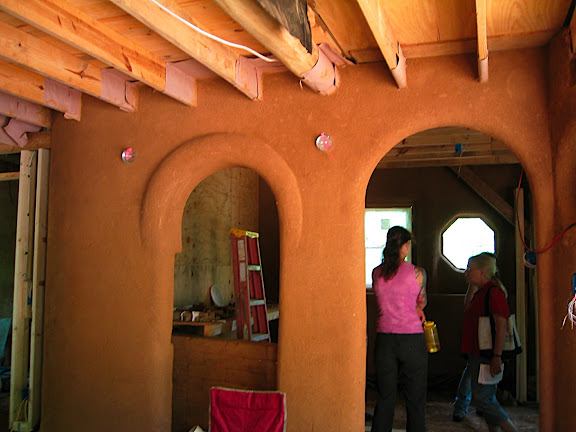
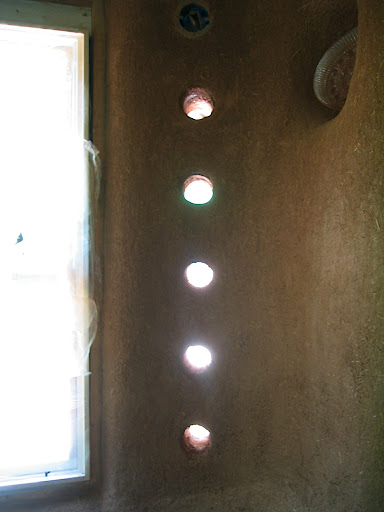
cob,
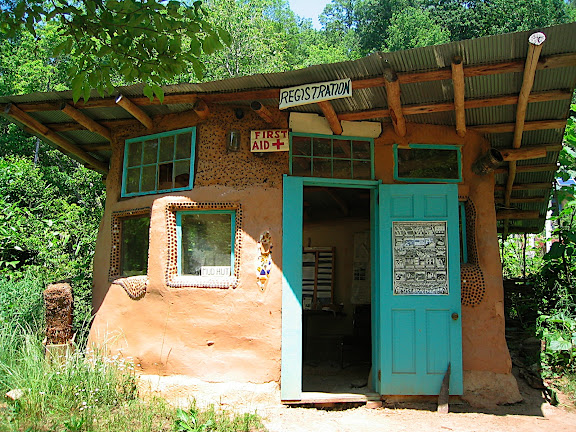
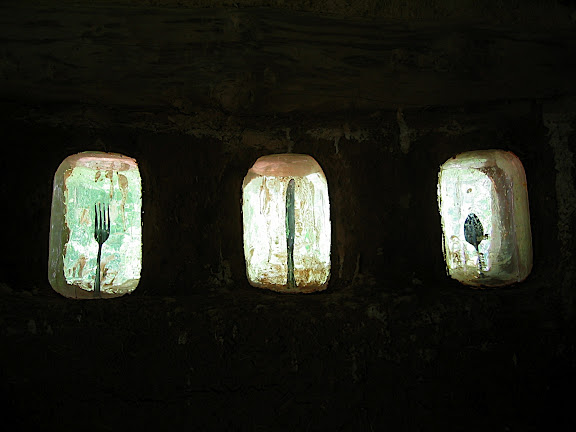
and sword porch.
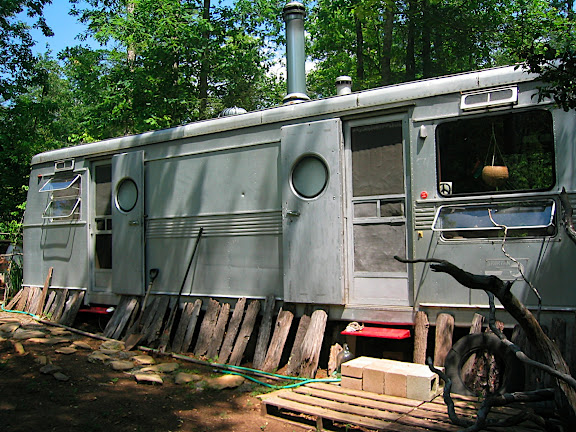
Recycled and salvaged materials were often used for flooring, insulation, doors & windows, etc.
This American Life
Many roofs at Earthaven sport photovoltaic solar panels, which provide a modest amount of electricity to human inhabitants.
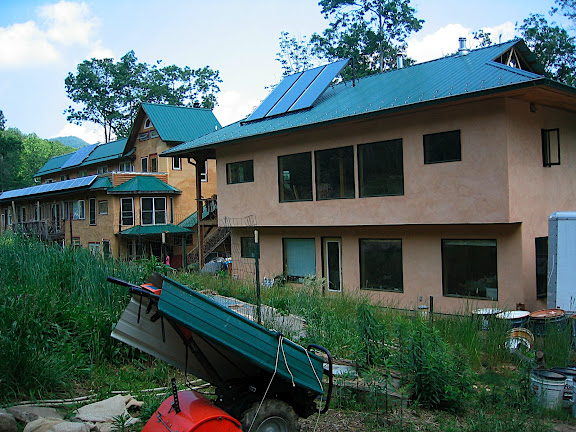
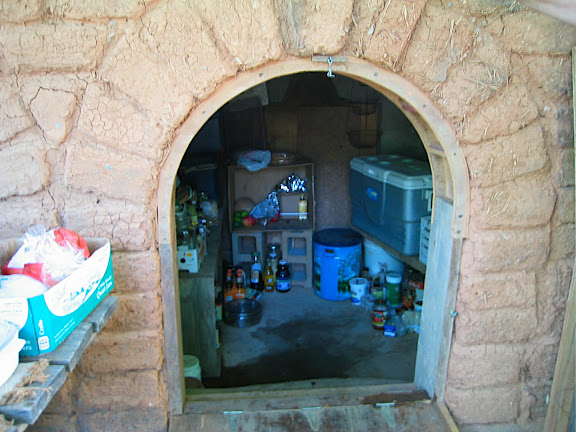
Many buildings have refrigerators, laptops, and lights, and some have more energy intensive tools like blenders. Some members try to avoid the hassle and expense of inverters and batteries, for example using root cellars.
Some members' homes are powered by a 600-Watt hydroelectric generator fed via a 4-inch pipe from the creek running through the property.
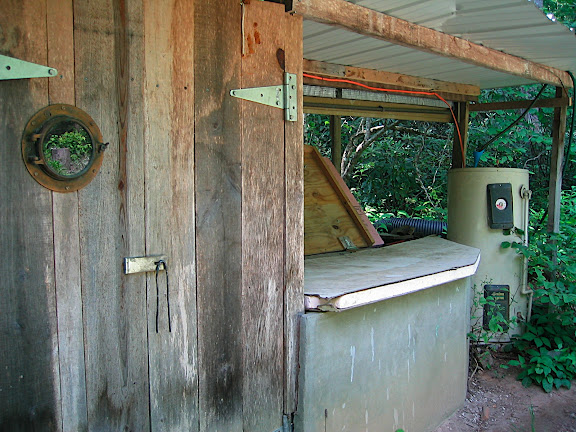
In the future, the waste heat produced during generation may be piped into a hot tub.
Most cooking is done with bought propane, and wood stoves provide the heat needed to get through the mild winters.
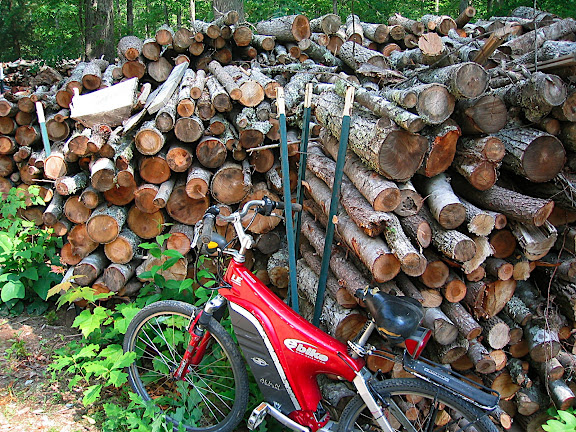
Earthaven has accumulated an 8-10 year supply of of firewood due to the extensive clearing needed on the previously heavily wooded (though second-growth) forest. I suspect this is also why stick & timber frames are more popular here than adobe or cob.
Useful Plants
Surprisingly, growing food is a relatively new development at Earthaven. Peter Bane, editor of Permaculture Activist magazine, keeps a "state-of-the-art" Permaculture garden, including perennial fruit such as raspberries, figs, peaches, and kiwis (seen here smothering the front porch awning in the center).
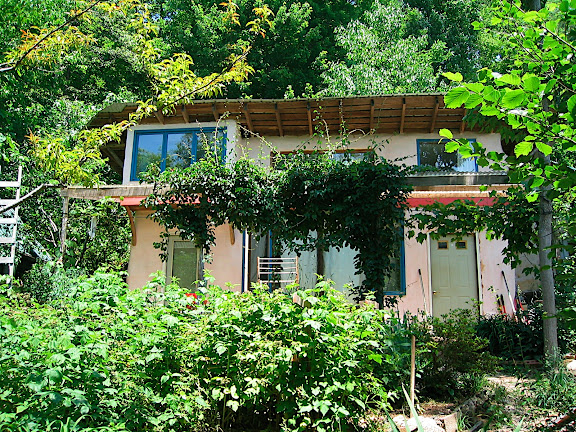
One of the neighborhoods' themes is edible landscaping - every plant in this area is edible in some way.
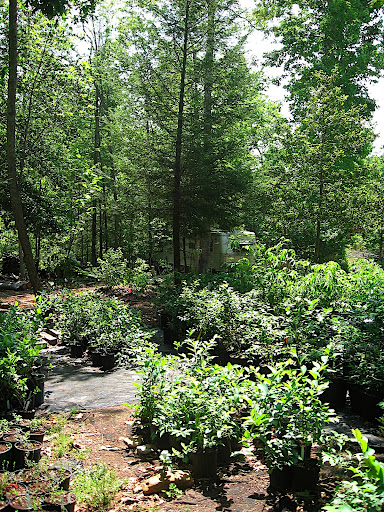
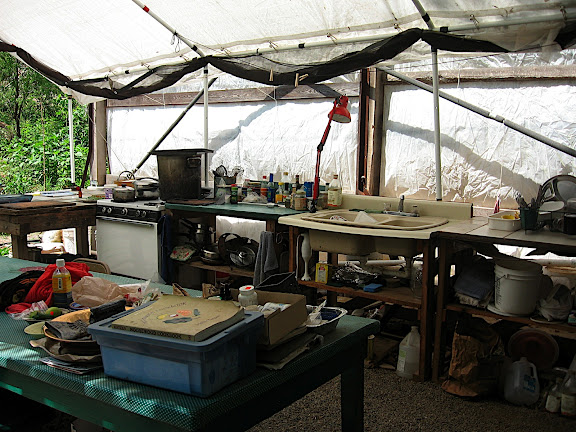
This neighborhood also features the hotttest kitchen.
Many members keep small garden plots, and some members run a several-acre CSA farm, which provides produce boxes to other members in exchange for Leaps (the Earthaven currency).
Mid-Terms
Earthaven was beautiful and impressive. In less than fifteen years they have built a village where everyone seems genuinely cheerful and comfortable. Members' personalities, needs, and ages vary widely, but this appears to be a more of a strength than a struggle. The variety of homes, gardens, designs, alongside the natural diversity of the mountainous forest, make for a very charismatic and interesting place.
Earthaven seems like a great bridge between American suburbs and sane, sustainable living. As Red Moon Song said, it is a "transitional community," still using propane and importing food. In our opinion, however, many of the buildings seemed overly extravagant and expensive – Suchi told us that the adobe house pictured above might end up costing $80,000 or $100,000.
We mused that perhaps the complex buildings are intended to prove that urbanites can live sustainably in an environment similar to the one in which they have grown up & grown old. And of course this is a reflection of the openness and acceptance that Earthaveners have for each other – there are no rules for style or materials for new buildings.
Suchi mentioned that usually it takes centuries for human cultures to build a village, but at Earthaven they are trying to do it in one generation. Their plan for housing 150 members means Earthaven is a perpetual construction site. For me this really affected the tone & feeling of the place - tractors and trucks parked all over, orange spray paint on the ground, half-dug-up pipes, buckets and piles of garbage on the side of paths. This will probably change as Earthaven matures, but that won't be for many years.
The driving distance from Asheville (about 50 minutes) seemed to be a good compromise. Many members go into the city on the weekends or for events – but nobody commutes there. Members who work outside Earthaven do so nearby in the country - landscaping, construction, excavating, etc. Suchi also mentioned that many women at Earthaven are finding it difficult to find work.
Earthaven also seems encumbered by laws, both beneficial and good-intentioned-but-backwards, as mentioned in Creating a Life Together. For example, in North Carolina, greywater systems are illegal (along with midwifery and raw milk).
Also, last year, due to a mostly uneventful Hepatitis-A outbreak at Earthaven, the county health department placed limits on their use of the land's 14 freshwater mountain springs. They are now required to build several wells and designate "water districts" so each water source serves fewer than 24 people (this part is NC state law). In the meantime, all volunteers, visitors, and work exchangers must bring their own water, because Earthaven cannot legally provide any for them.
Finals
We really enjoyed our tour of Earthaven and learned a lot that might take a while to sink in. We are now having a pleasant, organic time in Asheville – more on that soon.


3 comments:
Wow, loved hearing about Earthhaven, what an education you (and I) are getting. You are doing such a tremendous job on this blog, so entertaining and informative. I'm really glad to hear you got to go swimming in Texas, you little fishes. Heather, it brought tears to my eyes to see you put your toe into the Mississippi for Grandma!!! I'll let her know in the morning.
I went on a glorious horseback riding hunter pace today, it was one of my (many) favorite days of my life. Perfect weather, breeze blowing, out with dear friends on well behaved horses. Through forests, crossing fields with grasses swaying, across streams, over jumps. Nirvana.
I love you all! I love blogs!
Good overview of a challenging project. As a previous member of Earthaven I appreciate your insights about the limiting factors. With a population of MOSTLY city folks trying to adapt to forest living the stresses can be daunting, particularly to those who originally grew up in rural situations. As someone who grew up in the woods the limitations seemed insurmountable.
Take note that Peter Bane, publisher of the Permaculture Activist, no longer lives there as he and I moved on to Indiana where we now enjoy MUCH more freedom to design our lives and our permaculture system without the interminable processing, hassles, and waiting required by "consensus". We now feel that our general effect in the world is greatly enhanced and not suppressed by our friends, neighbors and students.
Also the image you identified as a root cellar was in fact one of the chambers of a composting toilet which was being used for tool storage while the toilet was being completed.
Post a Comment